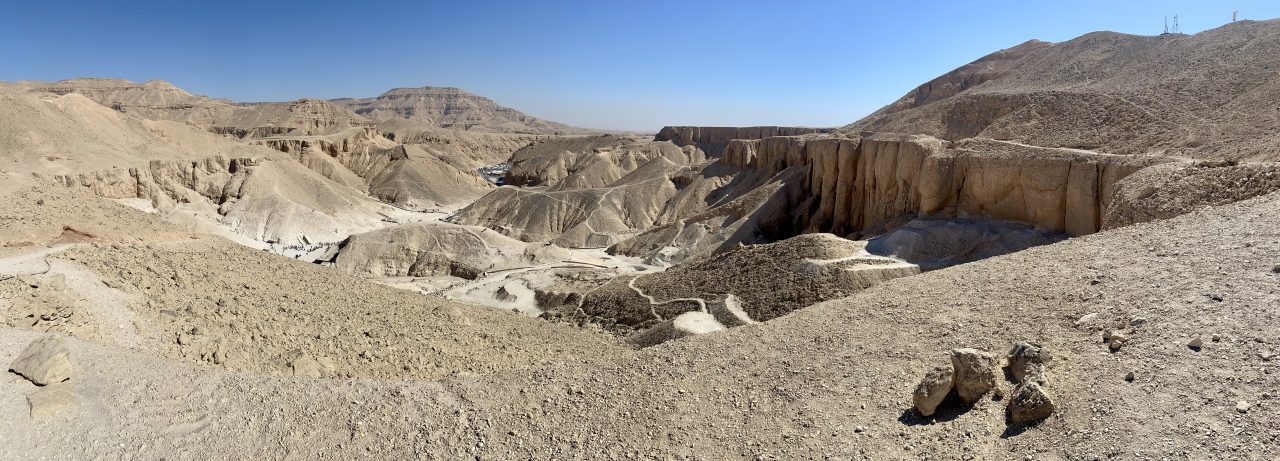
This summer’s relentless hot and dry conditions in England have shown that the ecological crisis we have been anticipating for a long time is now well and truly upon us. For the last few years I’ve found myself reading more and more about nature and the history of the landscape. We all know that the actions of human beings over the last couple of centuries are responsible for the current crisis, and one might conclude that it would be better if there were none of us around at all. That’s not a terribly optimistic, or realistic, vision for the future however(!), and we should remember that the practices that have brought the present situation about are relatively new, and that for most of history humans beings interacted much more sustainably with the world around us and that many of our practices improved the environment and biodiversity and other measurable signs of a healthy ecosystem.
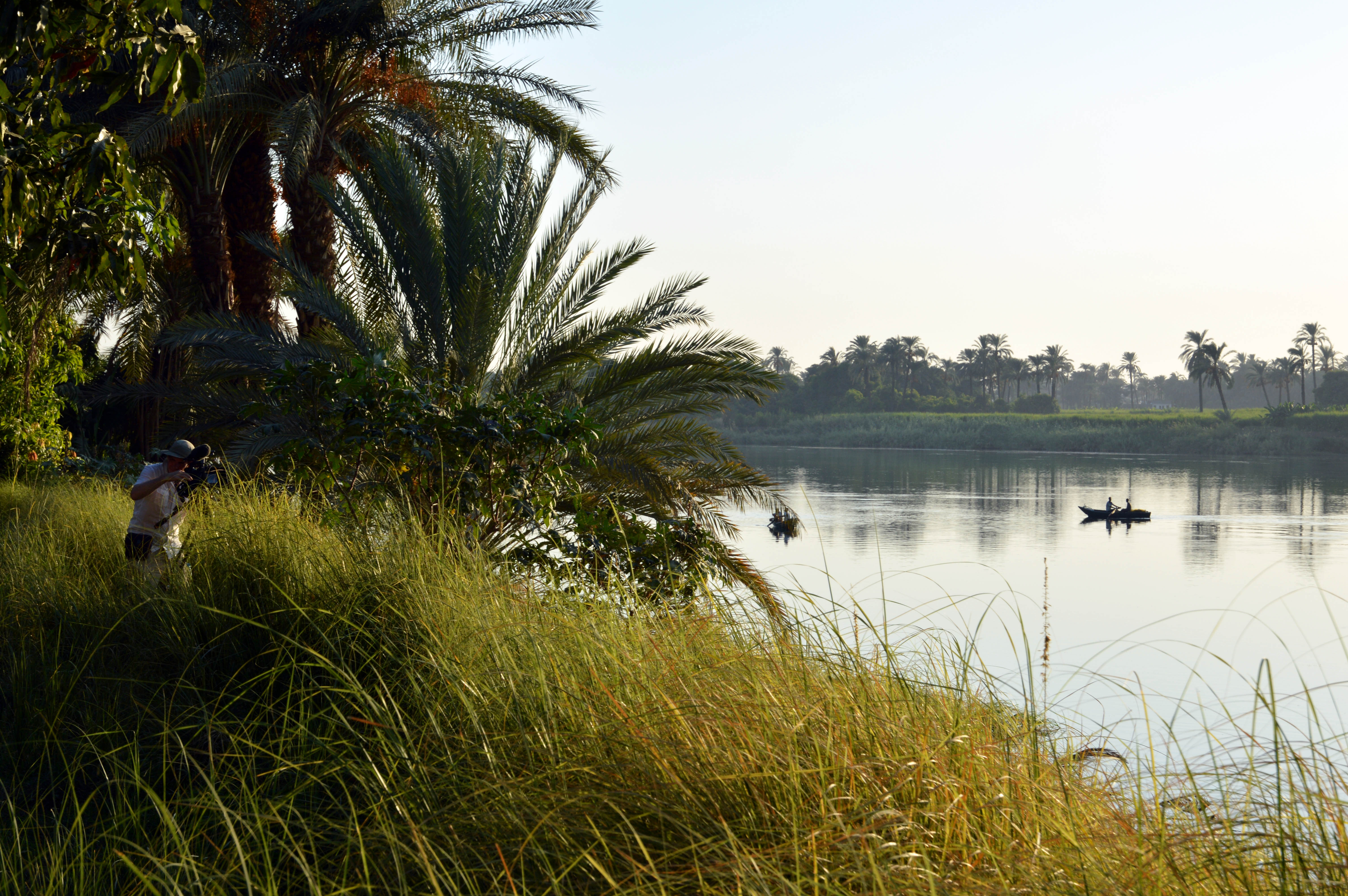
A typical Nile Valley landscape near Luxor. River, fishermen, palm trees, fields. If it weren’t for the cameraman hiding at left you could imagine this was an ancient scene…
For example, in ancient Britain woodcrafts such as coppicing helped to maintain a dynamic environment in which there were shady woods of tall trees, but also ‘wood pastures’ in which the trees had been cut for timber, allowing light to reach the ground, giving different plants and animals the chance to grow. Different areas would be cut in rotation creating a variety of habitats in varying stages of tree growth, and as a consequence a great diversity of wildlife was able to thrive. Where Britain’s remaining woods have grown wild as these practices have died out wildlife and biodiversity have suffered.
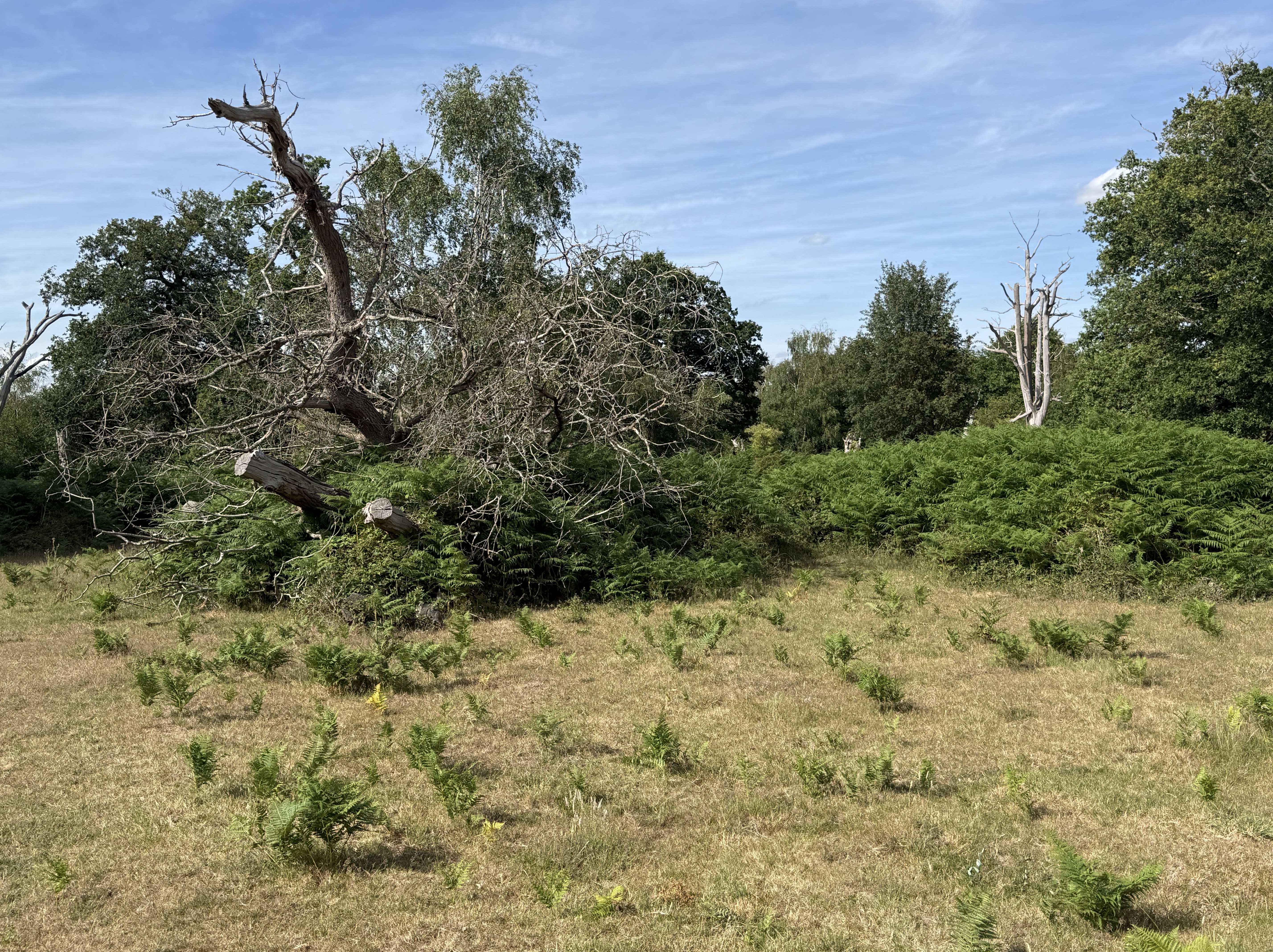
A mixed woodland area on Ashtead Common in Surrey, mature trees, dying trees, scrub…
There are in fact numerous ancient crafts which survived for many centuries before being replaced by modern industry, which demanded of the practitioners a much closer connection with the natural environment and which allowed human beings to exist in harmony with the plants and animals around them, rather than destroying them. Nature has lost out – and so have we therefore – as these human crafts have fallen out of fashion.
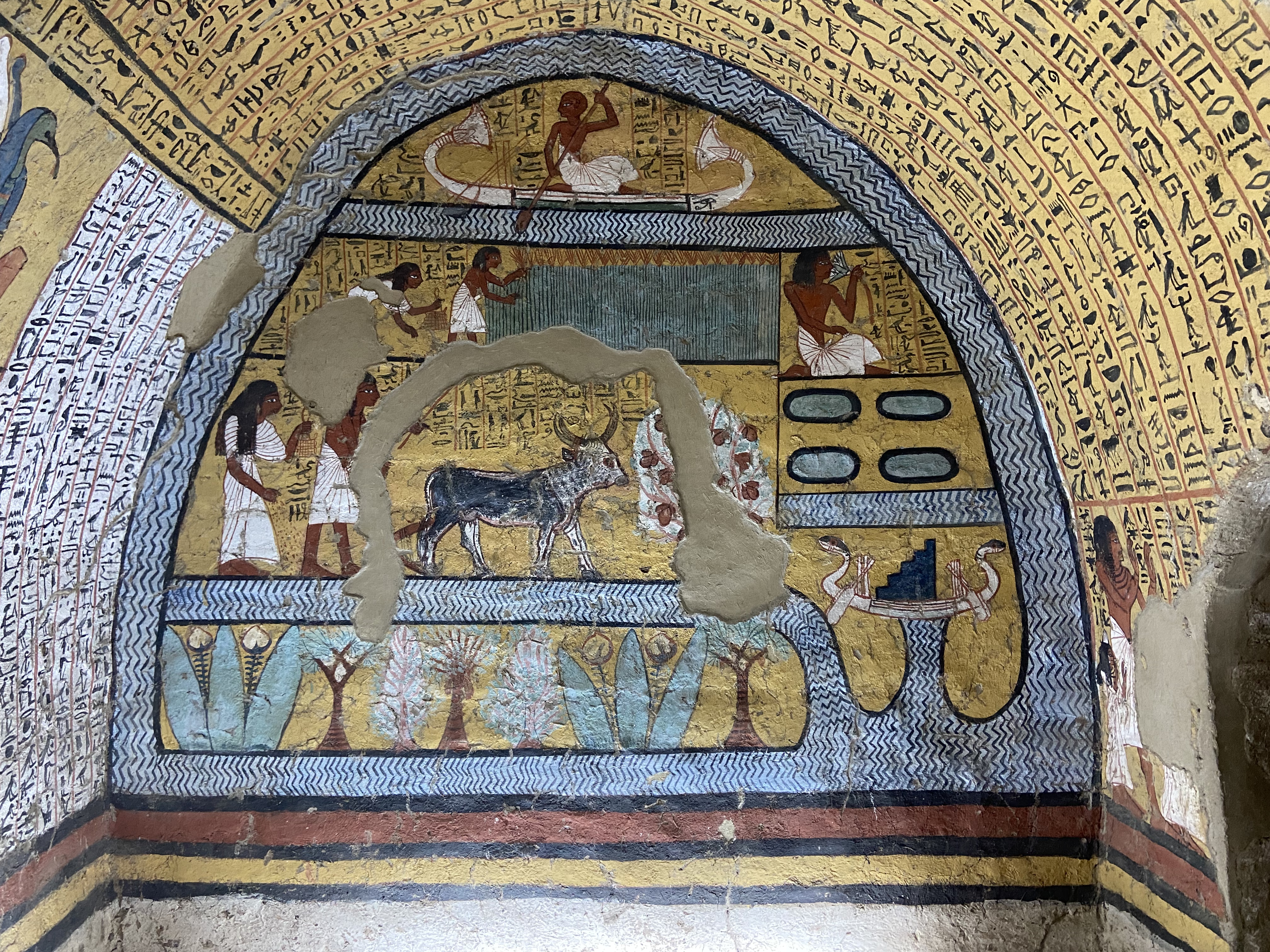
The fields of Iaru, the vision of a pastoral idyll in which the Egyptians hoped to dwell in the eternal next life, featuring the fundamentals of the Egyptian landscape: river, crops, a tree, animals (cattle) and people. From the tomb of Amennakht (TT 218) at Deir el-Medina.
“…the whole idea of the ascent of man, his separation from nature, his inevitable progress towards the supremacy of industrialised capitalism, towards this supreme version of himself, is a weird detour from how most people, throughout most of time, have thought about nature and our place in it.” – Rebecca Solnit1
A New Project
All this has had me wondering how I can do my bit, and if I could combine my expertise as an Egyptologist with my interest in the natural world and the history of human interaction with it. Ancient Egypt provides lots of examples of the ways in which people were able to thrive by working with, rather than at the expense of, the natural world, and the natural world was embedded in their way of life to a much greater extent than it is in ours. And this leads me to my current project, which seems to be the best way for an Egyptologist – this one at least – to respond to the current ecological crisis.
For now, I’m calling this new project ‘River, Earth, Sun and Sky’, and these four themes will form the basis for a series of lectures starting on my YouTube channel in January 2027. I hope there might also be a book in this at some point…
In each case there will be two main strands to what I want to talk/write about, one spiritual or intellectual, the other practical.
In the beginning…
According to Egyptian creation myth, before the world came into being there was nothing but a watery chaos known as ‘Nun’, from which the creator-god, Atum, came forth. Atum came to be associated with the sun-god as Ra-Atum.
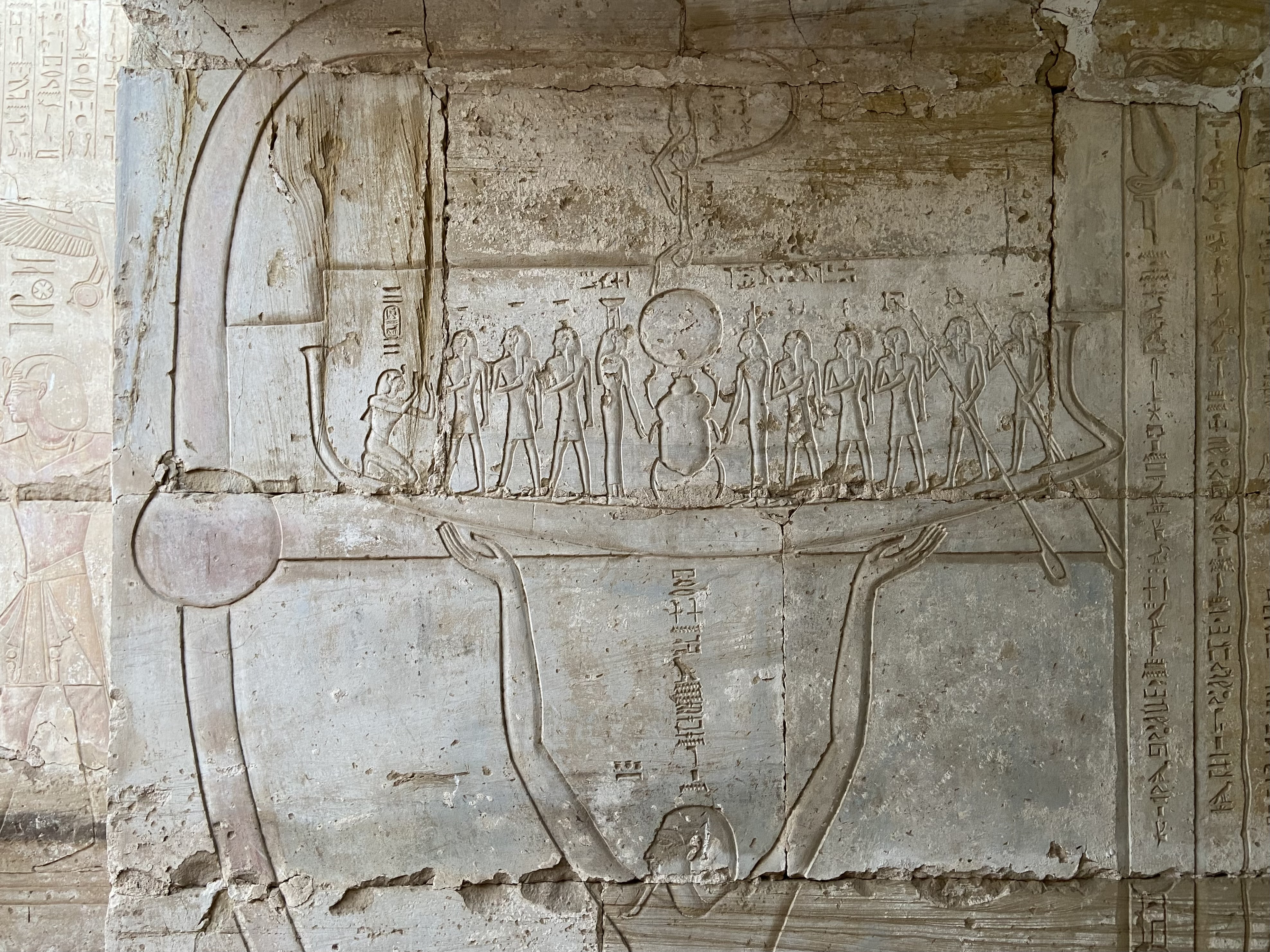
Nun, the embodiment of the watery chaos that existed before creation lifts up the sun – in the form of a scarab beetle and solar disk – on its way to rise into the sky, symbolising the beginning of life. From the Osireion, Abydos.
“…deep within the still waters of Nun there floated a perfect egg. And trapped within that perfect egg was a solitary spark of life. Suddenly, inexplicably, the egg cracked open. Life broke free of its confining shell and, with a surge of energy, a mound rose out of the waters. Seated on that mound was the god Atum. Atum had created himself. He now shone as the sun, bringing light to his new-born world.”2
The essences of the world in the moment of creation were water (Nun) and sunlight (Atum). In practical reality it was the water of the Nile and the life it supported that brought human beings to Egypt, and the Egyptians worshipped both the river and the sun as the gods Hapy and Ra respectively, for they life they brought:
‘Hapy, the divine embodiment of the river Nile
Who floods the fields that Re has made, to nourish all who thirst;
Who lets drink the waterless desert.
Earth rejoices!
Food provider, bounty maker,
Who creates all that is good!’
Adapted from the ‘Hymn to Hapy’3
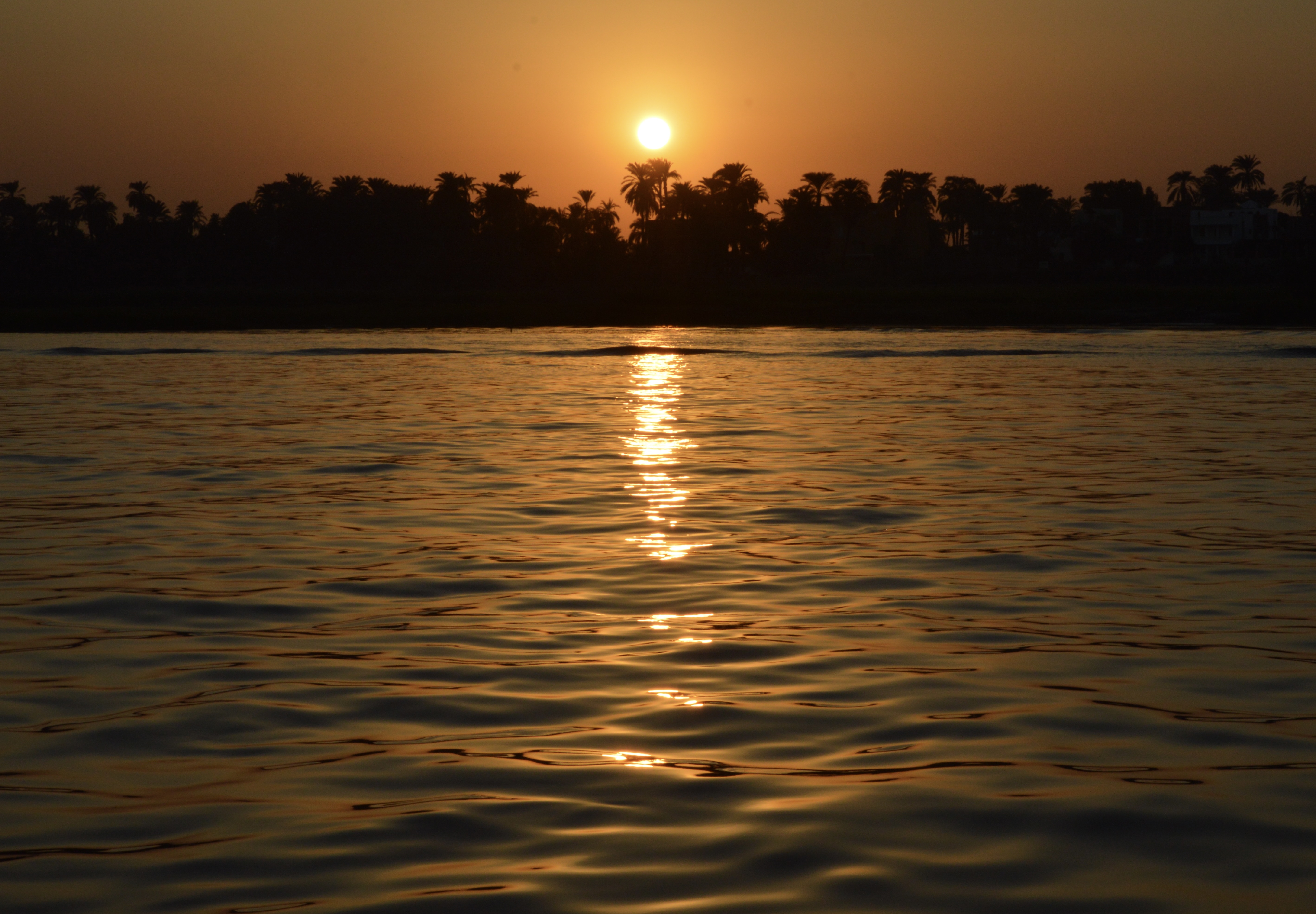
‘Hail to you, Ra, perfect each day,
Who rises at dawn without failing…
By the sight of your rays all flowers exist,
What lives and sprouts from the soil grows when you shine.
Drinking deep of your sight all flocks frisk,
The birds in the nest fly up in joy;
Their folded wings unfold in praise.’
Adapted from TWO HYMNS TO THE SUN-GOD and THE SHORT HYMN TO THE ATEN4
Atum then set creation in motion:
“Lonely on his mound, Atum set about creating the living. He grasped his penis, and from the fluids of his body sprang twin children: Shu the god of the dry air and Tefnut the goddess of moisture.”
“Shu and Tefnut loved each other as husband and wife, and Tefnut bore her brother’s children: Geb the handsome god of the earth and Nut the beautiful goddess of the sky. Geb lay down and became the fertile land.”5
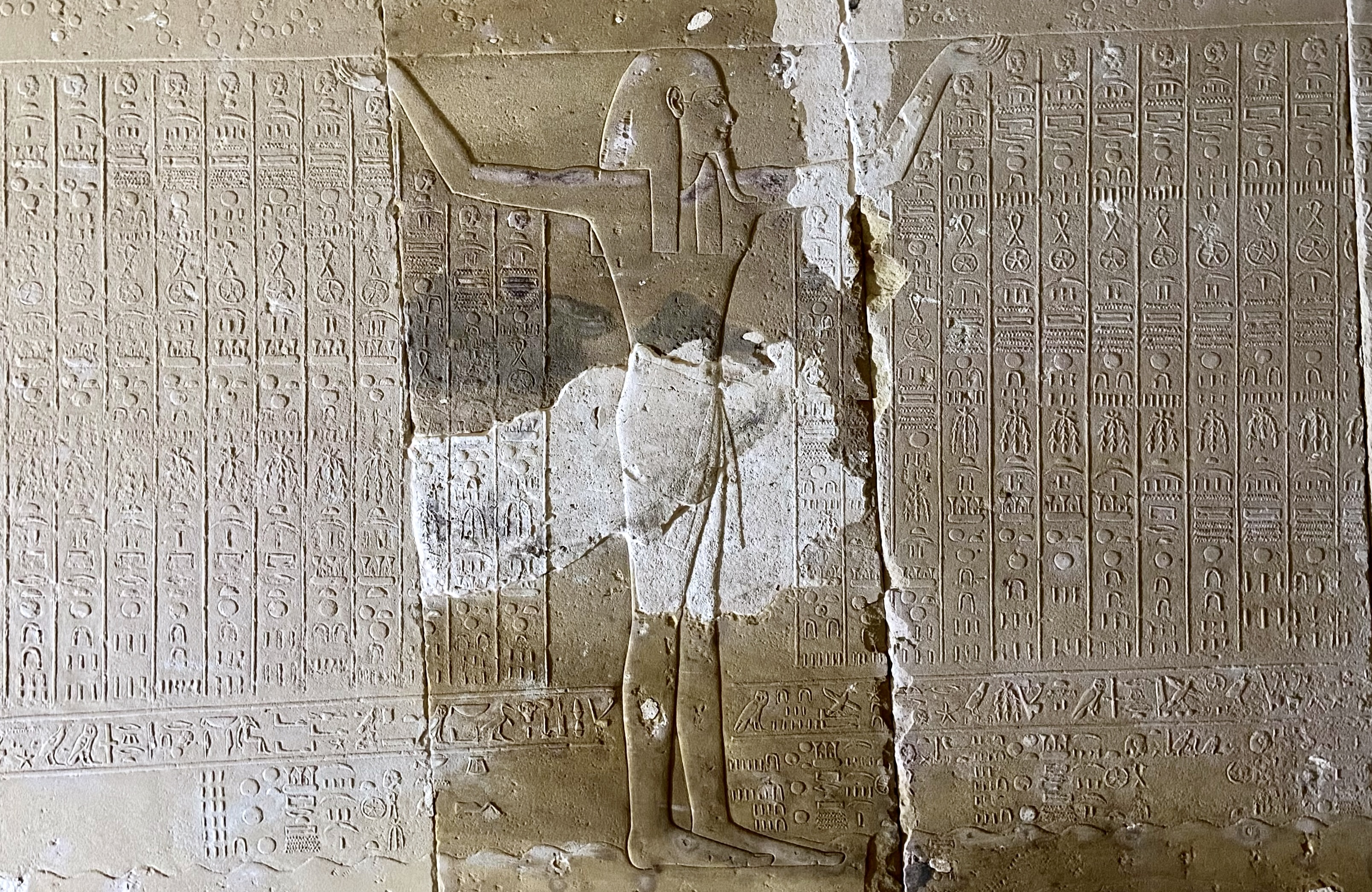
Get (Earth) supporting the sky, embodied by his sister, Nut. From the ceiling of the transverse chamber in the Osireion, Abydos.
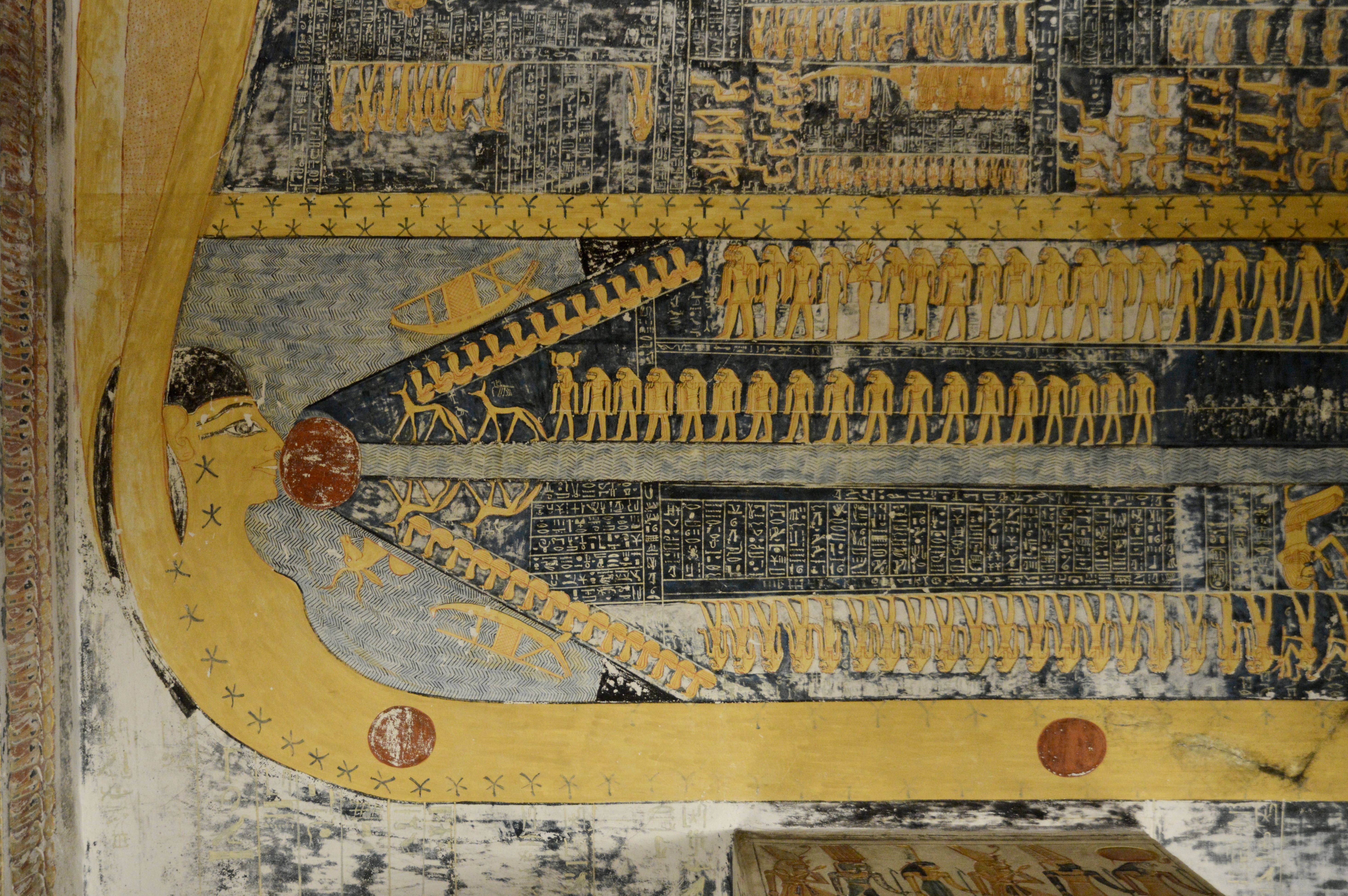
Nut (the sky), swallowing the sun at the d of the day. From the tomb of Ramesses VI (KV 9) in the Valley of Kings.
The union of Shu and Tefnut thus brought about the gods who embodied the third and fourth of my themes, Earth and Sky.
“[Geb] bore the fields and the marshes and the great River Nile. Grain sprouted from his ribs, and plants grew from his back. His laughter brought earth-quakes, and his anger brought famine. Nut loved her brother and happily bore his children, the glittering stars that decorate the dark night sky.”6
The practical: lessons from the Past
Many of us, myself included, have never had the kind of connection with the natural world that most people in the past would have had, of necessity. A connection that was born of working with it and in it, relying on it without taking it for granted, making use of it without destroying it.
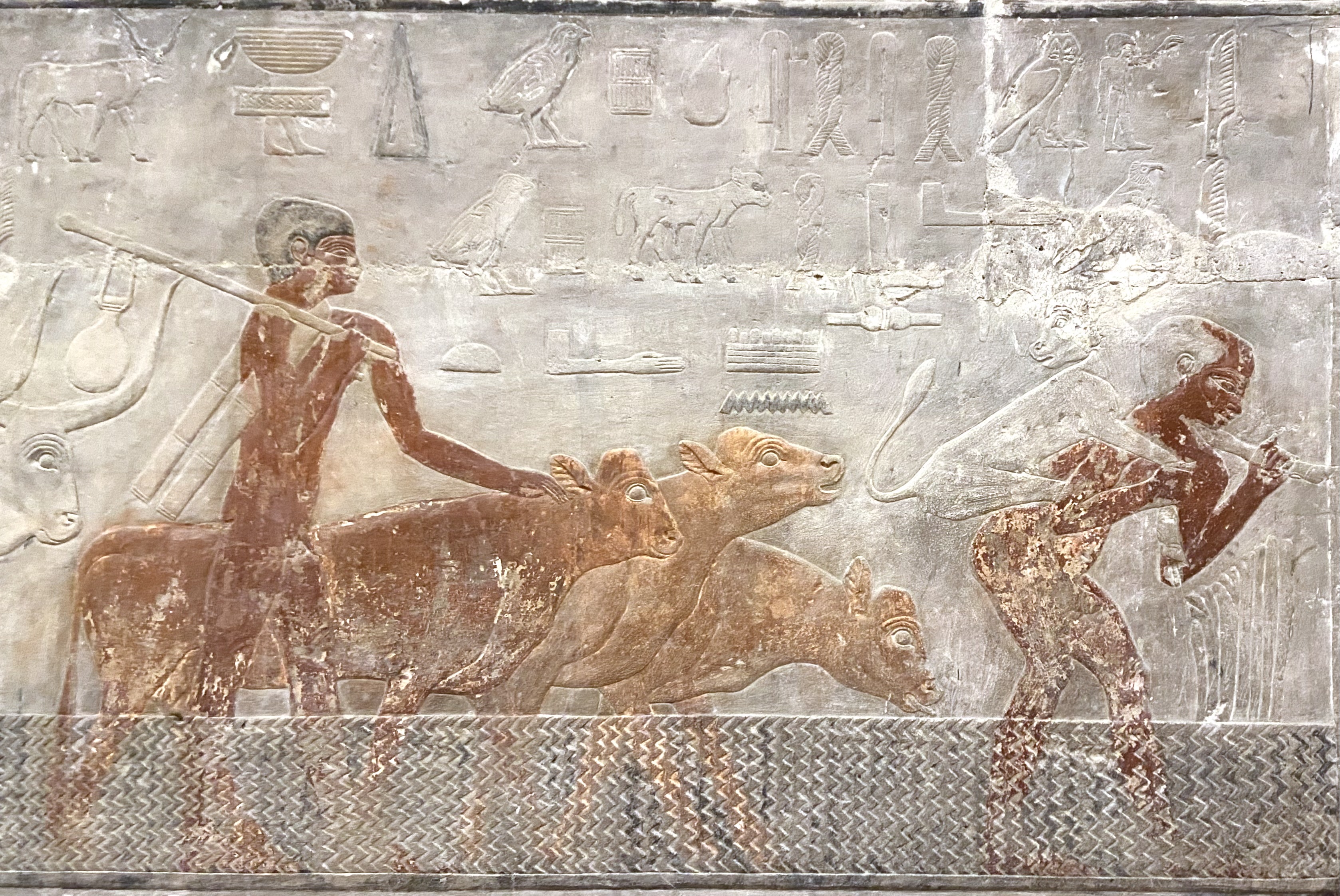
Leading cattle through the water. Mastaba of Ty, Saqqara.
Collectively, the Egyptians developed a huge range of skills to allow them to harness – sustainably – the natural resources around them, in turn allowing their civilization to flourish in the Nile Valley and Delta for over three thousand years (a lot longer than ours has so far).
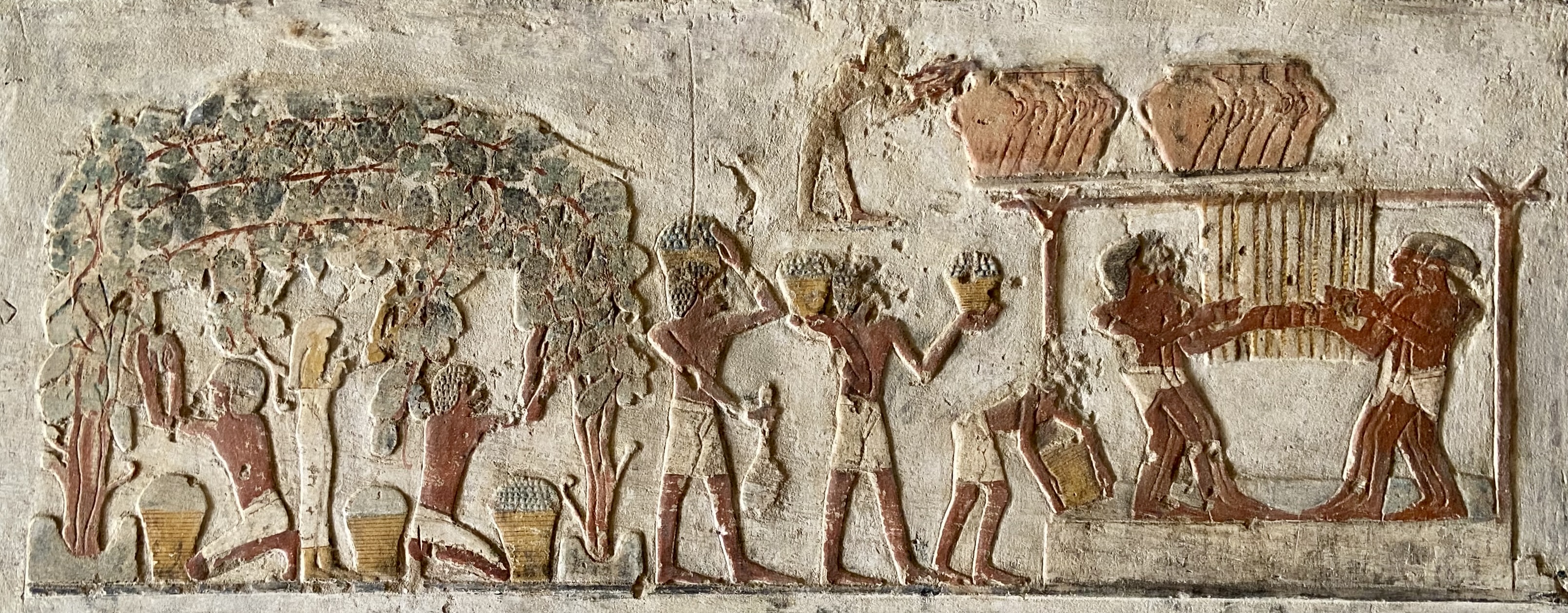
Harvesting grapes and making wine. Tomb of Paheri, Elkab.
These skills are now lost to most of us. We have replaced a reliance on natural processes – the passage of the sun, moon and stars though the sky, the annual inundation, the flow of the river for everything from drinking water, to irrigating crops, transport, communication – with machines.
Through their religious beliefs the natural environment was embedded in the way the Egyptians understood the world, providing them with another reason to treat it with the utmost respect. (Similar things, it seems, could be said of the pre-Christian inhabitants of Britain).
We are no longer in touch with nature as our ancestors would have been. And most of us haven’t the religious beliefs that oblige us to respect the natural world in the way the ancients’ beliefs did.
River, Earth, Sun and Sky
I’m still in the very early stages of working my ideas up but so far I’m thinking of covering the following themes under each of the four headings. Although, following the creation myths described above ‘River’ (water) might be followed by ‘Sun’, in practical terms I think it makes more sense for ‘Earth’ to come next, then ‘Sun’ and ‘Sky’.
RIVER
The climate of North Africa in Prehistory; desertification and movement of people and animals towards the Nile Valley; the earliest settlers and agriculture; hydro-engineering – irrigation, channels, gates, basins, water wheels and dams; the annual cycle of flood (inundation), growth and harvest (and, as a postscript, the deliberate ending of it in the twentieth century, and the consequences of that).
EARTH
Wildlife in North Africa at the time of the earliest settled populations, domestication of plants and animals, agriculture, hunting, ‘exotica’ and the world beyond the Nile Valley, symbolism in iconography, beliefs, language and the hieroglyphic script.
SUN
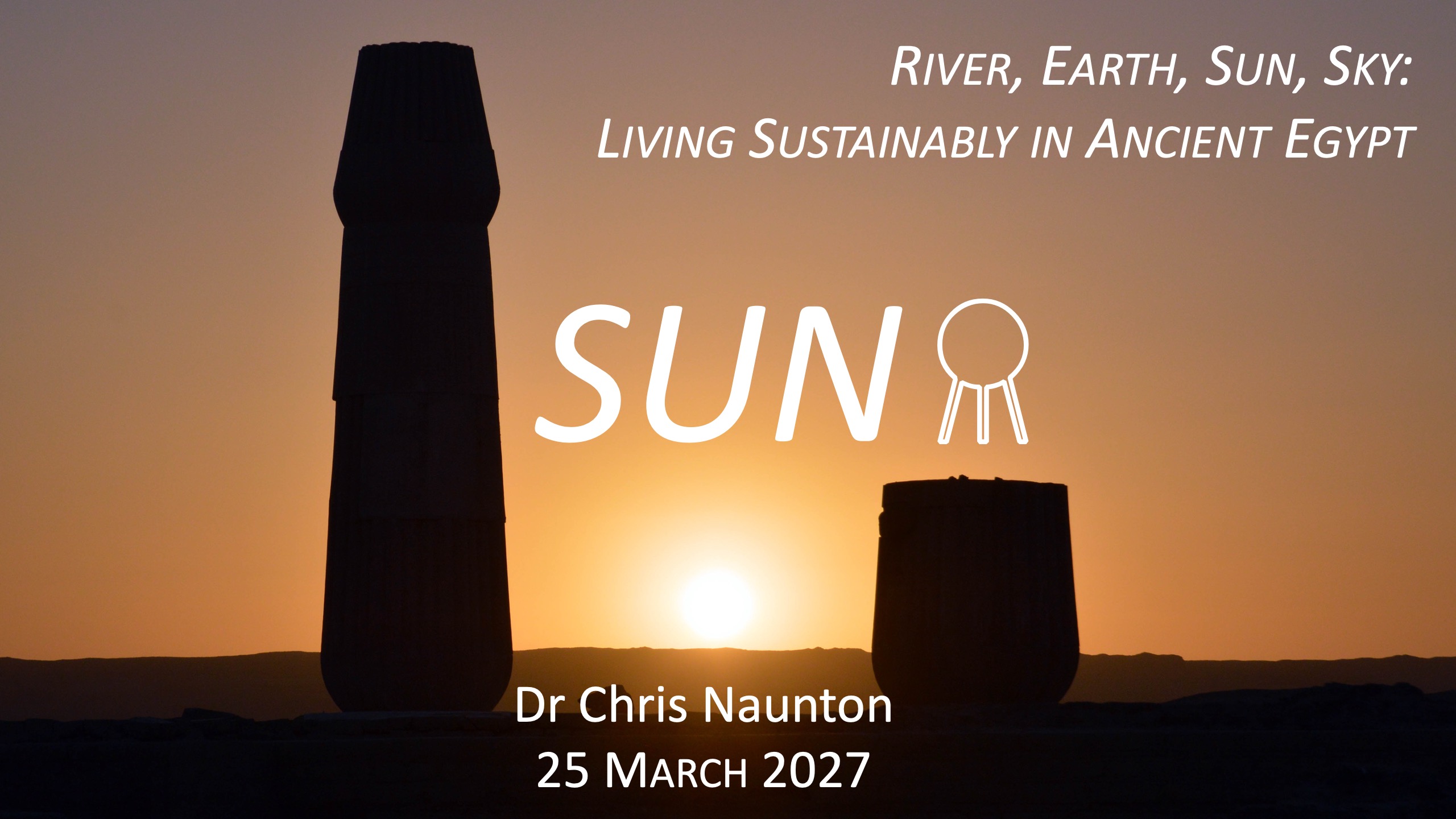
The passage of time during the day, the 12-hour day, sun clocks, the passage of time through the year, the equinoxes and solstices, the alignment of certain buildings with the rising or setting of the sun at certain times of year. Belief in the rising of the sun as being analogous with birth and creation, and the setting of the sun with death and the end of life.
SKY
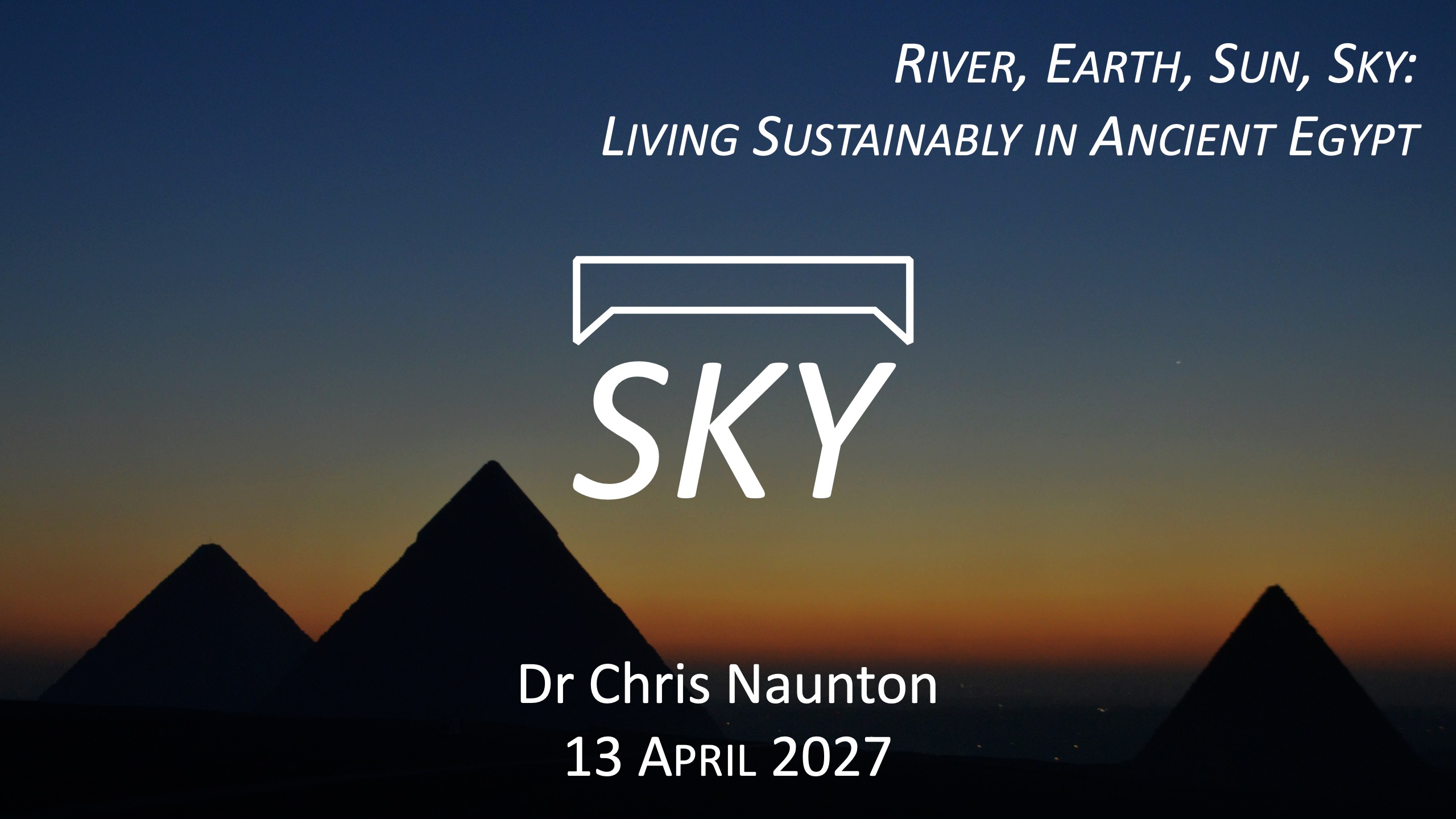
The moon and lunar calendar, eclipses, the stars, their use in aligning buildings, belief in the heavens as being the dwelling place of the gods. Astronomy, observation of the night sky, identification and depiction of individual stars, the zodiac. Eclipses.
Further chapters:
CRAFT LAND7
According to an alternative myth of creation, the ram-headed god Khnum created the world out of clay on a potter’s wheel:
“Khnum-Re,
God of the potter’s wheel,
…
He made mankind, created gods,
He fashioned flocks and herds.
He made birds, fishes, and reptiles all,
By his will Nun’s fishes leap from the caverns,
To feed men and gods in his time. He made plants in the field,
He dotted the shores with flowers;
He made fruit trees bear their fruit,
To fill the needs of men and gods.”
From THE GREAT HYMN TO KHNUM, temple of Esna.8
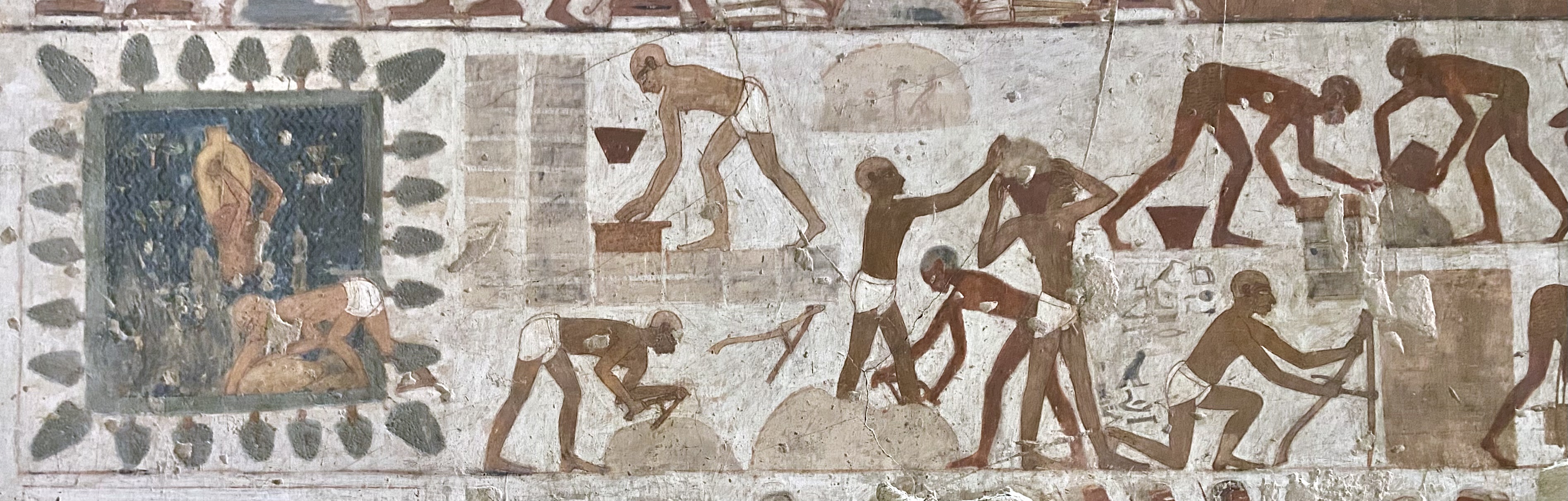
Making mud bricks. Tomb of Rekhmira (TT 100).
The Egyptians left to us one of the richest legacies in terms of material culture of any ancient civilisation. They made loads of stuff, and loads of it survived. And they got very good at making stuff too, drawing on their observation of naturally occurring resources – from the silts used to make mudbricks, to the limestone blocks of the pyramids, the hardstones from which they made some of the finest sculptures mankind has ever produced, and the precious stones and metals that were exquisitely fashioned into Tutankhamun’s grave goods. They had a great abundance of skills, borne of an acute awareness of the resources their environment provided, and honed techniques that allowed them to extract and manipulate these materials – by hand – into the most highly functional and also beautiful objects. They were also excellent at recycling.
CLIMATE CHANGE in ANCIENT EGYPT
“His Majesty had been praying for an inundation from his father
Amen-Rê, lord of the Thrones of Two-lands,
in order to prevent dearth happening in his time.
Well, then, everything that comes forth upon His Majesty’s lips,
his father Amûn makes it happen at once.
When the time for the rising of the Inundation came,
it continued rising greatly each day
and it passed many days rising at the rate of one cubit every day.
It penetrated the hills of South-land,
it overtopped the mounds of North-land,
and the land was (again) Primeval Waters, an inert (expanse),
without land being distinguishable from river.
…
Well, then, the sky (even) rained in Bow-land (Nubia);
and adorned all the hills.
Every man of Bow-land (Nubia) was inundated with an abundance of everything,
Black(-land) (Egypt) was in beautiful festival,
and they thanked god for His Majesty.
His Majesty’s heart was happier than anything
about what [his fa]ther Amûn did for him,
…
It (the inundation) made the entire countryside good,
it killed off the vermin and snakes that were in it (the countryside),
it kept off the devouring of the locusts from it (the countryside),
and it prevented the (scorching) south winds from stealing (the harvest).
So I was able to reap a harvest into granaries, the size of which was incalculable,
consisting of Upper Egyptian barley, Lower Egyptian barley,
and every (other kind of) grain that grows on the surface of the earth.”
From a stela of Taharqo on the high Nile in Year 6 from Kawa.10
In addition to the daily, monthly, seasonal and annual cycles, there were other occasional events, and changes to the climate and environment which played out over longer periods of time, all of which had an effect on the Egyptians and demanded responses from them.
“The gods (made?) the sky come with a tempest of (rain?); it caused darkness in the Western region; the sky was unleashed… Each house, … each shelter (or each covered place) that they reached… were floating in the water …with no one able to light the torch anywhere.”
From the ‘Tempest Stela’ of Ahmose I.9
Events such as storms and eclipses, high and low Niles, were recorded by the Egyptians, along with their ideas – rooted in their religious beliefs – as to how why these events occurred. In additional to the Egyptological evidence, mainly of ancient texts, environmental science allows us to see how the climate changed, providing us with possible explanations for social and political developments such as the end of the Old or New Kingdoms, or the unrest and rebellions during the Ptolemaic Period, all of which may have been times during which the climate in Egypt and elsewhere, was unfavourable. We are much more aware now than in the past that the course of the Nile changed dramatically, and sometimes rapidly, affecting the areas that could be farmed or built upon, causing destruction in some places, but opportunities in others. Ramesses the Great’s capital city had to be abandoned when the river channel it was built next to dried up; but the expansion of the temples of Karnak was perhaps only made possible as the river, next to which it had been built, receded, freeing up new land onto which the temple could be extended. Climate and environmental change is not entirely new, and humans, including the Egyptians, have had to respond in the past.
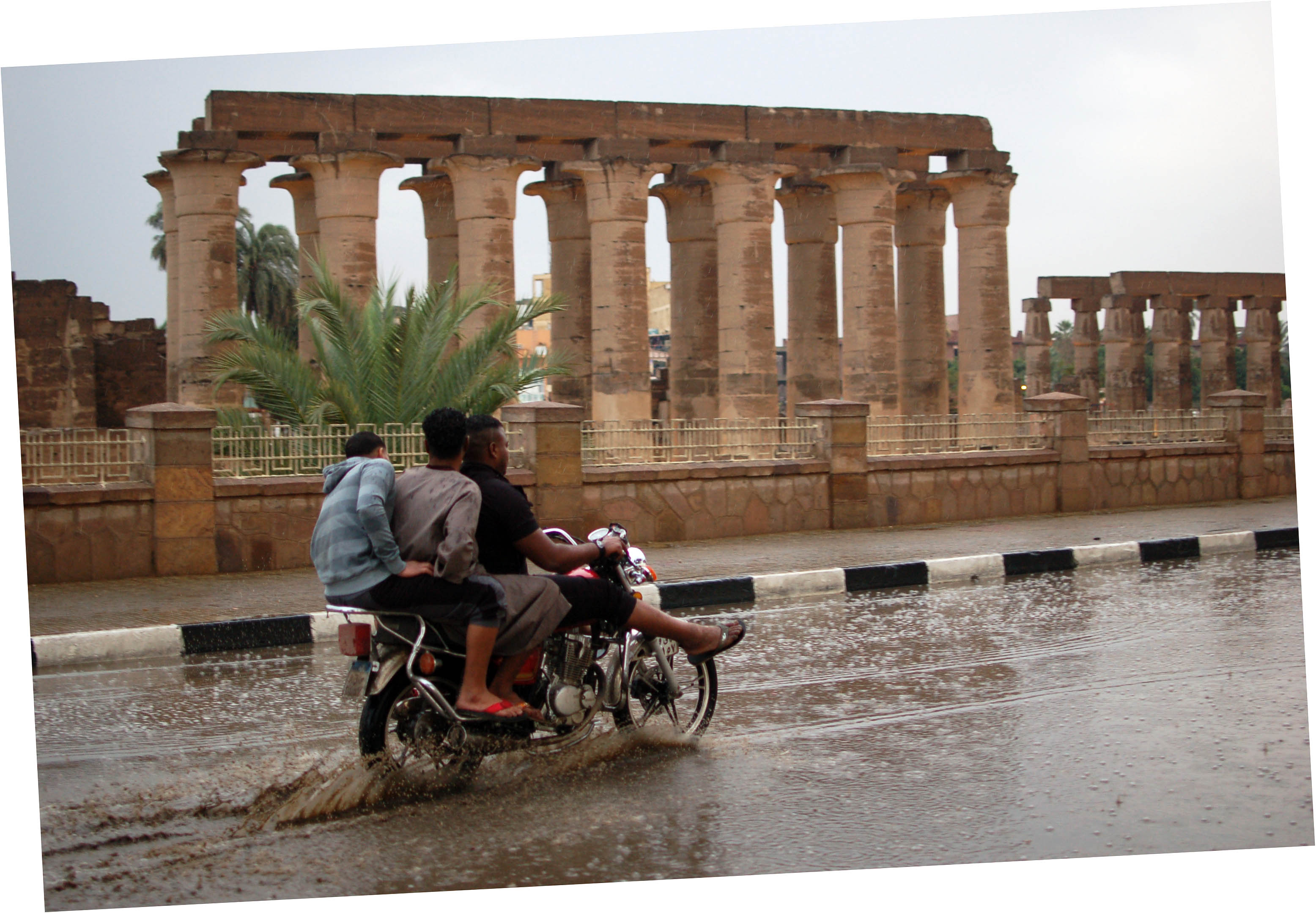
It does rain in Egypt! Luxor, 2014.
AKHENATEN the ECOLOGIST PHARAOH?
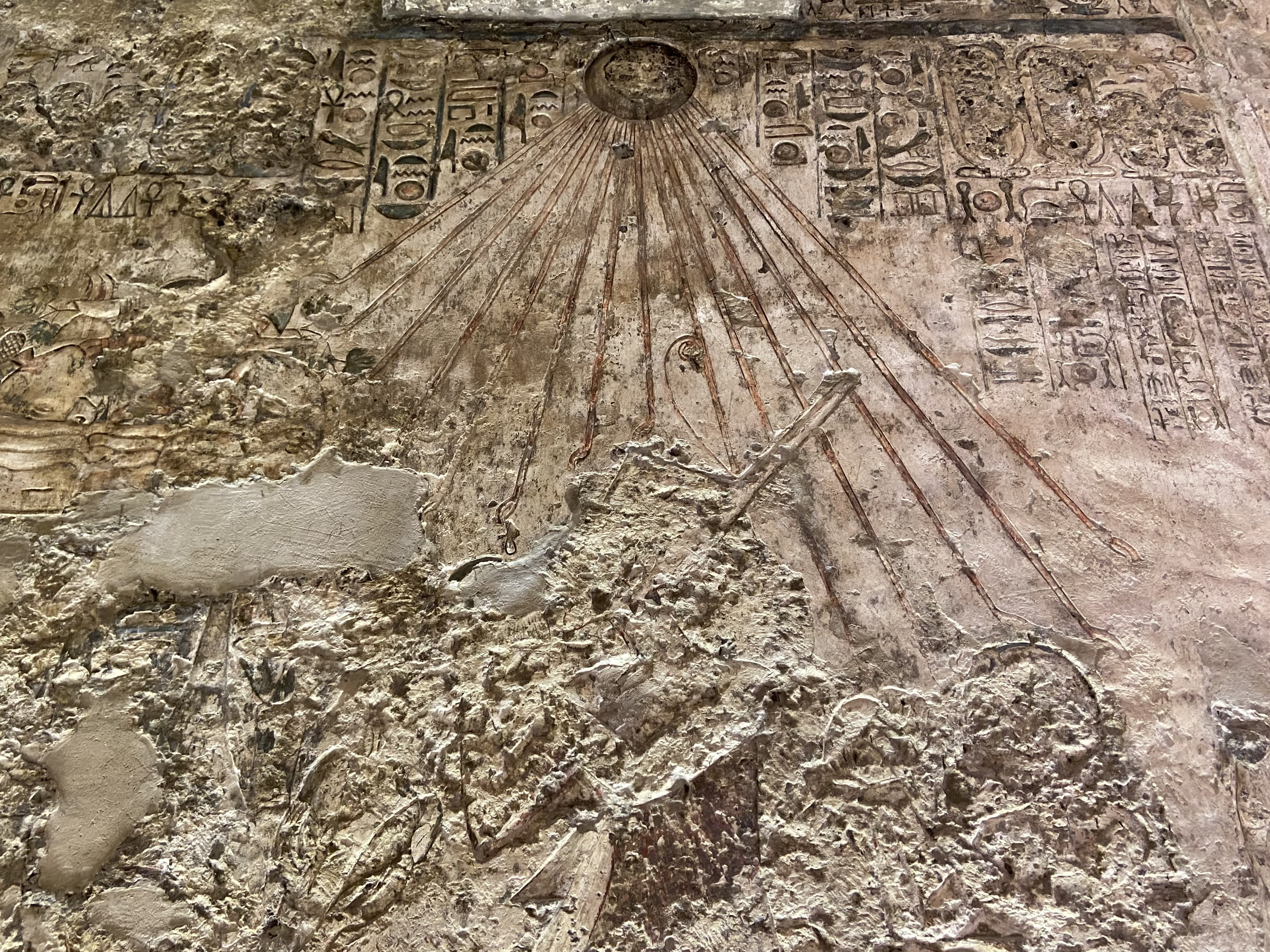
The Aten, its beneficent rays reaching down towards Akhenaten and his world.
A case study. One of the most striking features of the buildings that have survived at Amarna, site of Akhenaten’s short-lived capital city, is the prevalence of scenes of nature –river, plants, birds and animals – that were painted onto the walls of the royal palace. This perhaps chimes with the emphasis in Akhenaten’s new religion on his god, the Aten’s role as a god of creation. As the Aten was a form of the sun it is perhaps not surprising that creation and the cycle of life, death and rebirth should be central to the new religion, but did it also place a new emphasis on the importance of the natural world? The palace paintings and archaeological for gardens and even a kind of zoo at the North Palace would also seem to suggest that the royal family were particularly keen to immerse themselves in nature. Had the urban environment of Thebes or Memphis deprived them of the contact with plants, animals and birds that many of us today are also missing?
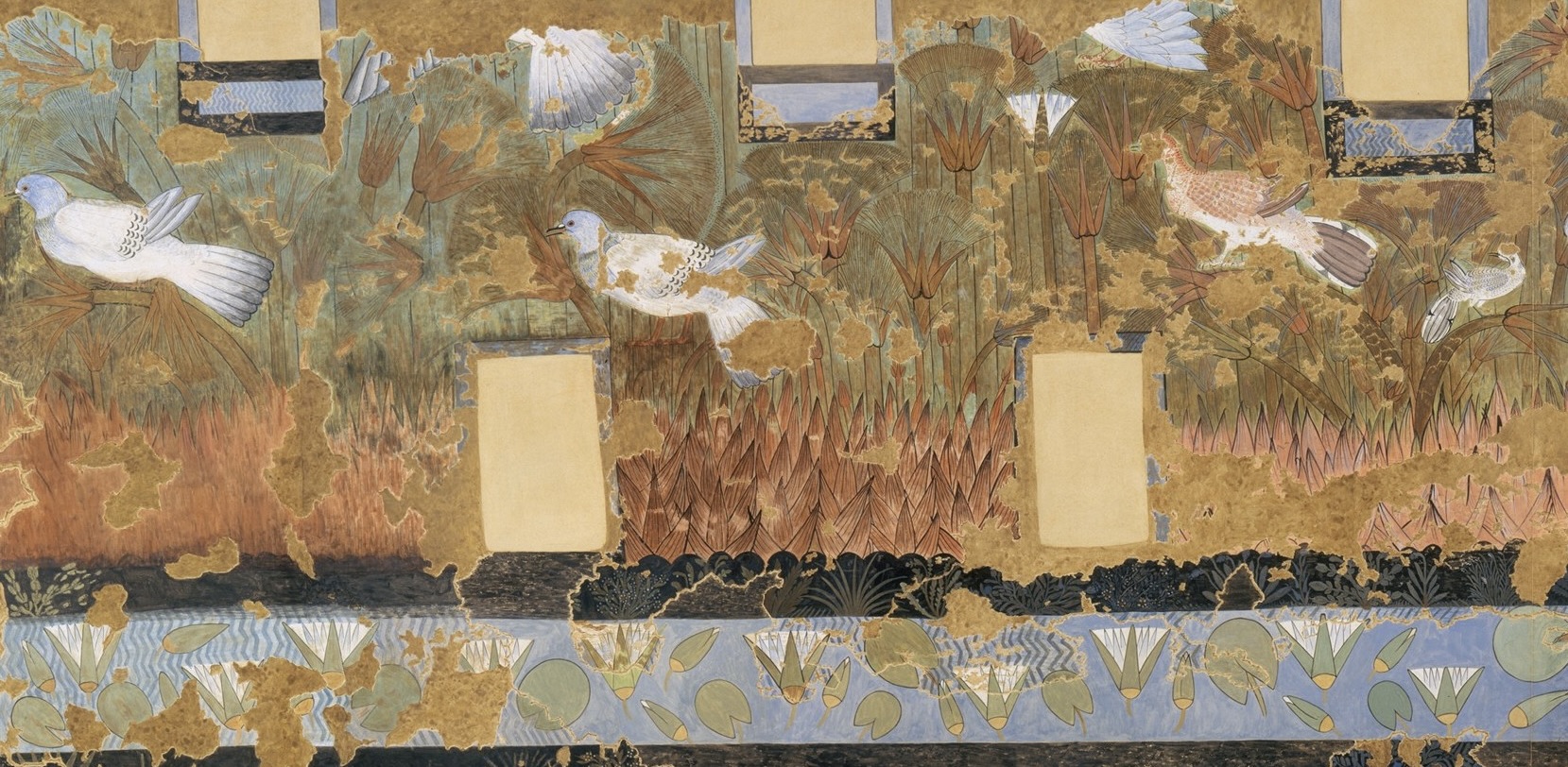
Facsimile by Nina de Garis Davies of a continuous scene of waterfowl and plants which was painted on four walls of the ‘Green Room’ in the North Palace at Amarna. Metropolitan Museum of Art, New York, public domain / open access.
—–
I hope to make River, Earth, Sun and Sky the main focus of my work in the coming months. Let me know what you think!
NOTES:
1. Williams, Z, ‘A new world is being born: Rebecca Solnit on the ‘slow revolution’ the far right cannot tolerate’ The Guardian, 25 March 2026.
2. Tyldesley, J, Myths & legends of ancient Egypt, 37.
3. Lichtheim, Miriam; Lopriano, Antonio; Lopriano, Antonio. Ancient Egyptian Literature, Volume I: The Old and Middle Kingdoms(pp. 205-206). (Function). Kindle Edition.
4. Lichtheim, Miriam; Fischer-Elfert, Hans-W; Fischer-Elfert, Hans-W. Ancient Egyptian Literature, Volume II: The New Kingdom (p. 142, 149). (Function). Kindle Edition.
5. Tyldesley, J, Myths & legends of ancient Egypt, 37-8.
6. Tyldesley, J, Myths & legends of ancient Egypt, 38.
7. Title borrowed from Craft Land. A Journey Through Britain’s Living Past by James Fox (London, 2025).
8. Lichtheim, Miriam; Manning, J.G.; Manning, Joseph G.. Ancient Egyptian Literature, Volume III: The Late Period (pp. 112-114). (Function). Kindle Edition.
9. ‘Tempest Stele’ via Wikipedia (https://en.wikipedia.org/wiki/Tempest_Stele) accessed 29 September 2026.
10. Eide, T et al, Fontes Historiae Nubiorum. Textual Sources for the Middle Nile Region Between the Eighth Century BC and the Sixth Century AD Vol. I From the Eighth Century to the Mid-Fifth Century BC (Bergen, 1994), 145 ff.


great, sensitive thoughts. It strikes me that with increasing population and machinery, what went out the window was hands on “management”of our natural resources, taking care of them. Pat Kennedy, West Sussex
Many thanks for these encouraging words Pat!
Absolutely fascinating, Chris. I can’t wait for the book.
You appear to have recovered from your earlier ‘burnout’. I couldn’t be more pleased.
Best wishes
Mike Clegg
Sent from my iPhone
Sent from my iPhone
Lovely to read this, thanks Michael! I hope I can get the book off the ground… I am feeling a lot better and ready – and enthusiastic! – to get back to work. Thanks again!
Interesting topic, Chris. I did a short on line course with Dr Bernadette Brady on ancient skies and it was fascinating.
Thanks Linda! I’ve got Bernadette’s work v much in mind for the ‘Sky’ part of the series 🙂
And I’ve just had an email from Kemet Club. Dr Judith Bunbury will be giving lectures on the subject.
See you soon.
Thank you for this choice of topics, Chris. Nature is a vital part of human existence and therefore concerns us all. Given the focus on ancient Egypt, these topics are all the more valuable to me.
You have already put a great deal of effort into presenting the subject matter. These are going to be very educational lectures. I am really looking forward to them.
Best wishesAstrid
Many thanks Astrid! I’m glad to know these topics are of interest to you and I’m looking forward to giving the lectures in due course!
Looking forward to joining what are sure to be fascinating lectures and an eventual book. Great idea Chris
Many thanks Maria!
This project sounds interesting and absorbing! Good luck with it!
Thanks Martin!
This sounds a project full of interesting areas of research!
Thanks! Yes, I’m enjoying it so far and looking forward to working up the lectures and perhaps to getting writing at some point…
happy to see this project find its wings 🪽
Thank you, for this and for all the encouragement and inspiration.