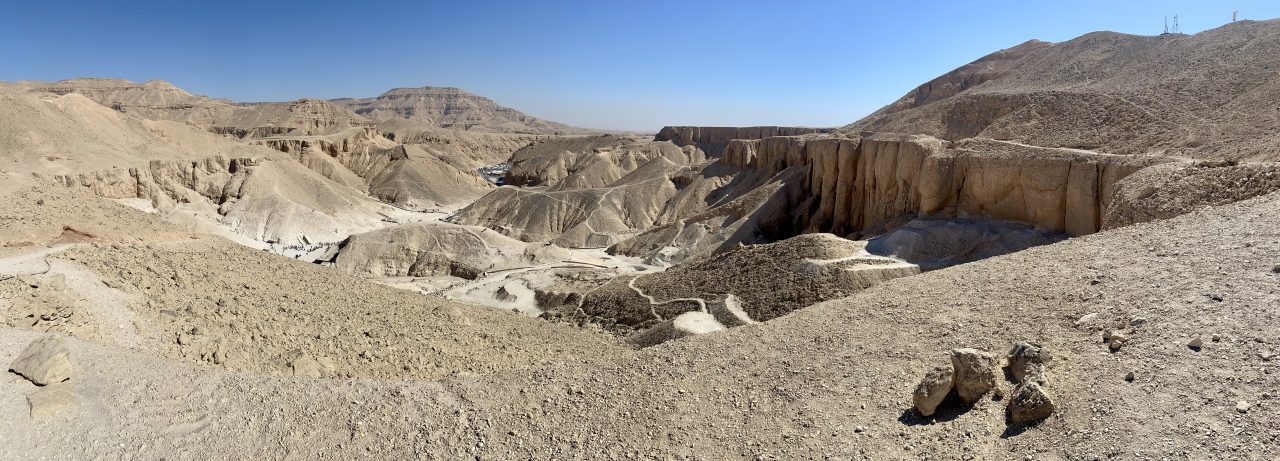
Thank you to everyone who watched my talk ‘The EGYPTIAN LABYRINTH – The Middle Kingdom and the Faiyum Region’ which was broadcast on YouTube on 3 October 2024 and will, as of July 2025, be freely available via YouTube for a limited time here and below.

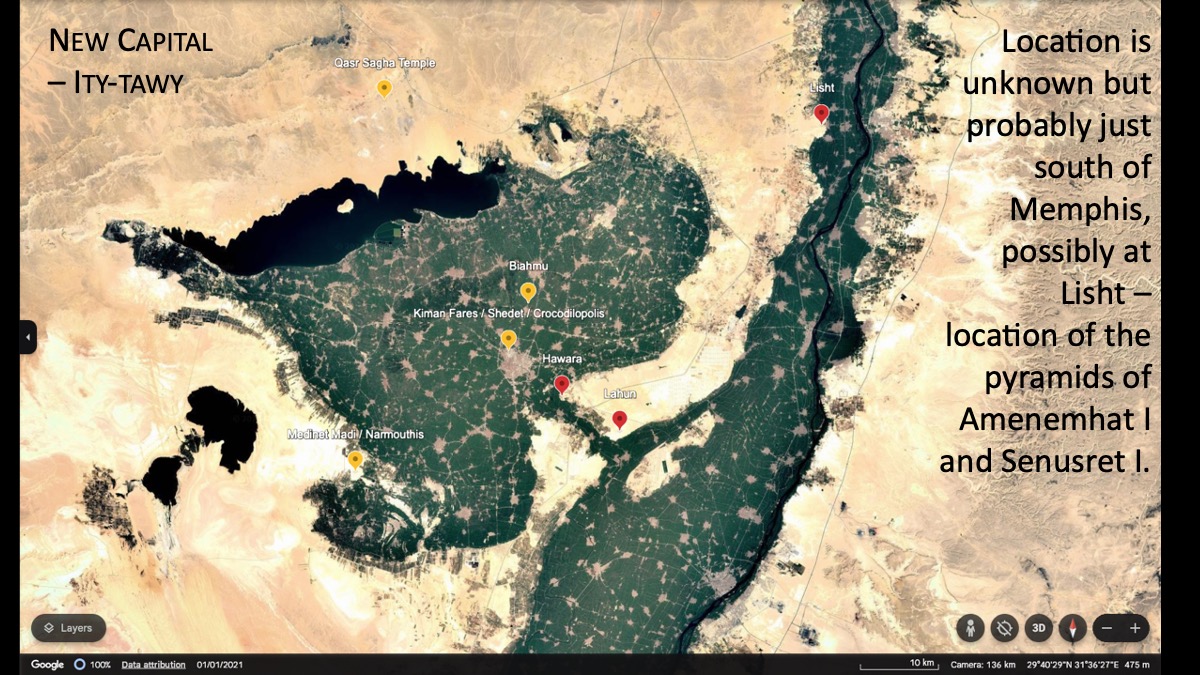
The Faiyum basin is a natural depression, a little west of the northernmost part of the Nile Valley into which water and silts flowed from the river creating a richly fertile region. This oasis seems to have been particularly significant during the Middle Kingdom, when the new capital city, Ity-Tawy, was established nearby, and the Ptolemaic Period when it was extensively cultivated. Several Twelfth Dynasty kings built pyramids in the region, including Amenemhat III, whose vast mortuary complex appears to have inspired the much later legend of a ‘labyrinth’. This talk explores the rich history and monuments of the region, and asks if Amenemhat’s temple really was the labyrinth or if it perhaps still awaits us elsewhere….
*****
First of all my slides are here. All images in the presentation are my own unless otherwise stated.
My map of sites in the Faiyum region in Google Earth is here.
Miriam Lichtheim’s anthology of ancient texts in translation, Ancient Egyptian Literature, remains one of the best sources of this kind of information; the ‘instruction of Amenemhat’, some quotes from which I included in my slides, is included in the volume for The Old and Middle Kingdoms.
The printed volumes of the Topographical Bibliography… / ‘Porter & Moss’ from which my plans of Dahshur and Lahun were taken can be downloaded in PDF form from the Griffith Institute website here.
The isometric drawing of the pyramids of Senusret II at Lahun and Amenemhat III at Hawara were taken from Mark Lehner’s Complete Pyramids.
Flinders Petrie’s archaeological reports are available for free via archive.org as follows:
Hawara, Biahmu, and Arsinoe (1889)
Illahun, Kahun and Gurob, 1889-1890 (1891)
The Labyrinth Gerzeh and Mazghuneh (1912)
Lahun II (1923)
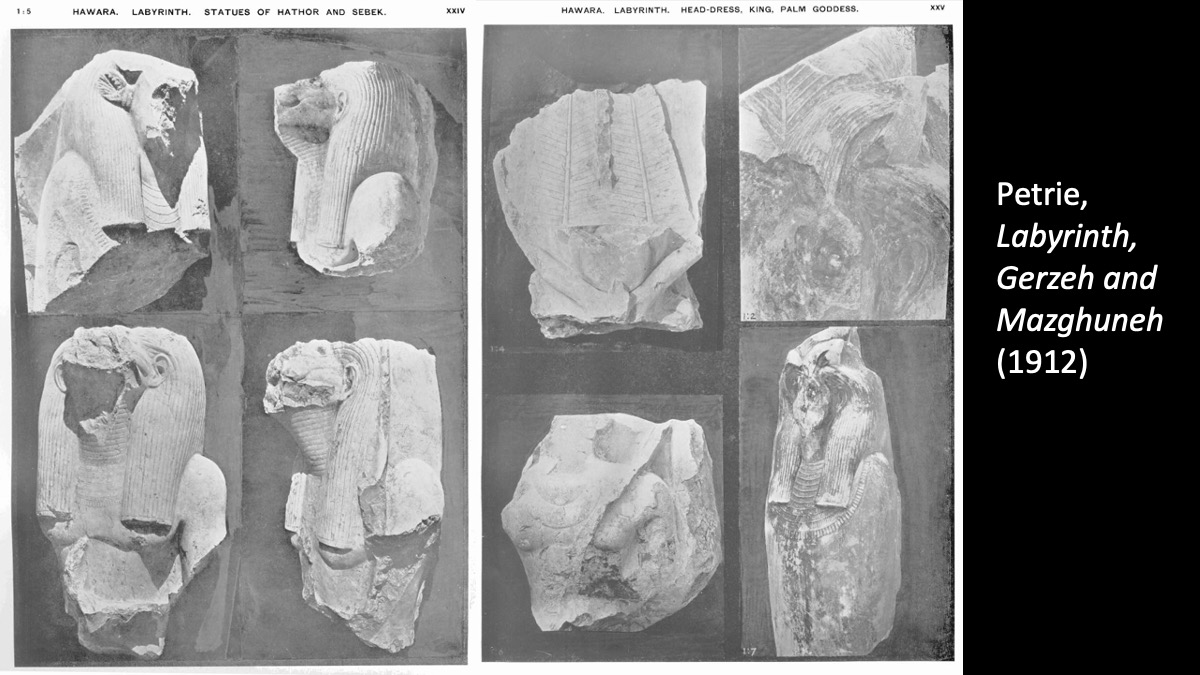
Statue fragments discovered in the labyrinth by Petrie
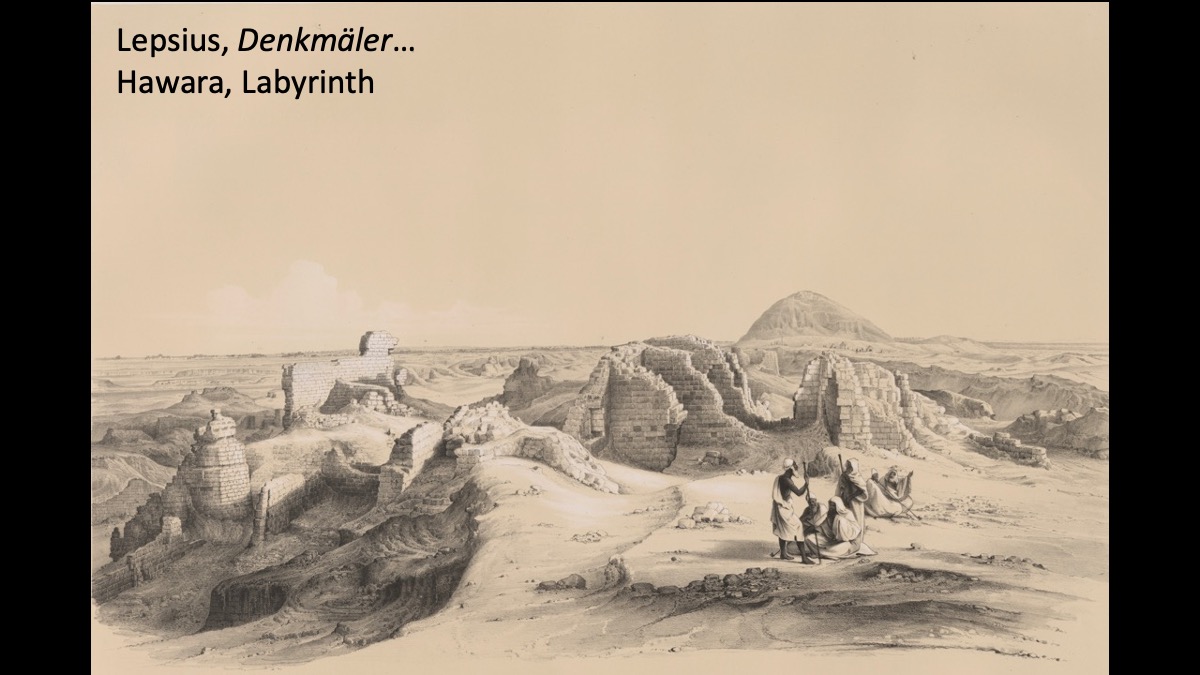
I included drawings of Hawara and Biahmu from Lepsius’ Denkmäler, all of which are freely available online thanks to the New York Public Library. The relevant series of plates are here.
Eric Uphill’s book on the evidence for the labyrinth, which remains the best single-volume study on the subject, Pharaoh’s Gateway To Eternity: The Hawara Labyrinth of King Amenemhat III, is available in paperback or e-book here.
The website of the recent LABYRINTH Project is here.
For more information about my own book, Egyptologists’ Notebooks, which includes Jean-Jaques Rifaud’s extraordinary drawings of Kiman Fares (Kom Mediate Fares) please go here.
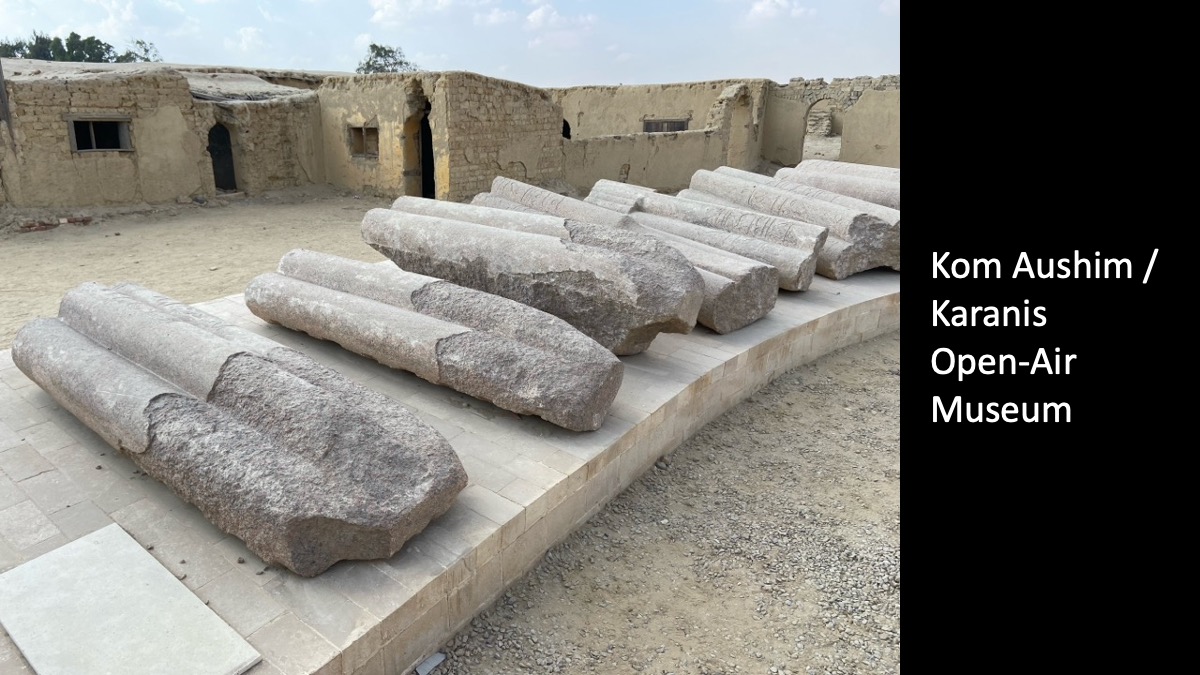
Stonework from the main temple of Sobek in the capital of the region, ancient Shedet, modern Faiyum city. Now on display in the open-air museum at Kom Aushim.
The website https://fayoumegypt.com contains much useful information and many interesting photos some of which I used in my presentation.
I think that’s everything but if there’s anything I’ve missed or you have any questions please let me know via this page.
Please note: any links to Amazon on this page are ‘associate links’. As an Amazon Associate, I earn from qualifying purchases.
 Dr Chris Naunton