Thank you to everyone who attended my online talk ‘Alexandria Found and Lost’ in August 2023. This page provides links and references to further reading should you wish to take your interest in any of the topics covered further.
A recording of this talk is currently available to YouTube channel members in the ‘Lapis’ category here and below. To become a member please see here.
Alexandria was one of the great cities in the ancient world. Although Alexander the Great had died before the port he had founded could be built, his body was buried there, and it became the capital of the dynasty founded by his general Ptolemy (I), which came to an end with the death of the famous Cleopatra. Her tomb was also in Alexandria (probably!). Over the centuries Alexandria has been the scene of numerous pivotal events in ancient history. Many of its great monuments, including the lighthouse, one of the ancient wonders of the world, have been lost, but traces survived into modern times. Much that remains is now concealed beneath the modern city – Egypt’s second largest – with much more hidden under the waters of the Mediterranean.
The slides I used are here.
The map of sites mentioned in the talk which I created in Google Earth is here.
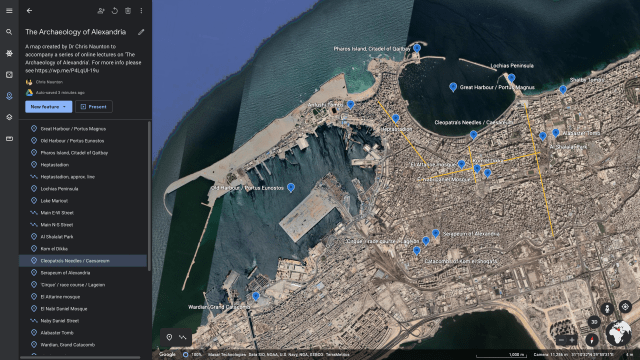
Please do take a look – it’s a great way of exploring the archaeology of Alexandria in its modern setting!
Overview, maps etc
If I were to recommend one book on the ancient city it would be Jean-Yves Empereur’s Alexandria Rediscovered, a concise and very readable overview of the archaeological evidence including descriptions of his own fieldwork for the Centre d’Études Alexandrines (see below) and many excellent illustrations.
My presentation included one or two maps from Bagnall and Rathbone’s excellent and concise guide to Ptolemaic, Roman and Late Antique sites and monuments in Egypt, Egypt from Alexander to the Copts. Several other maps came from Judith McKenzie’s magisterial book, The Architecture of Alexandria and Egypt: 300 BC – AD 700.
I also used some of the beautiful and brilliant reconstruction drawings of ancient sites in Alexandria made by Jean-Claude Golvin whose website and published books are a treasure-trove of his visions of what the world looked like in the ancient past. The Egyptian section is here.
Ancient textual sources
For Alexander’s life and campaign including his sojourn into Egypt and foundation of Alexandria, I used Romm, J (Ed.), Alexander The Great: Selections from Arrian, Diodorus, Plutarch, and Quintus Curtius. And although it must be used with caution as it’s less an accurate record than ancient propaganda, you might enjoy the stories in The Alexander Romance, for which I used Stoneman, R, The Greek Alexander Romance.
I drew heavily on Strabo’s description of Alexandria to give an idea of what the city was apparently like in the first years of Roman rule. The relevant volume of his Geographica is XVII, which is freely available online here.
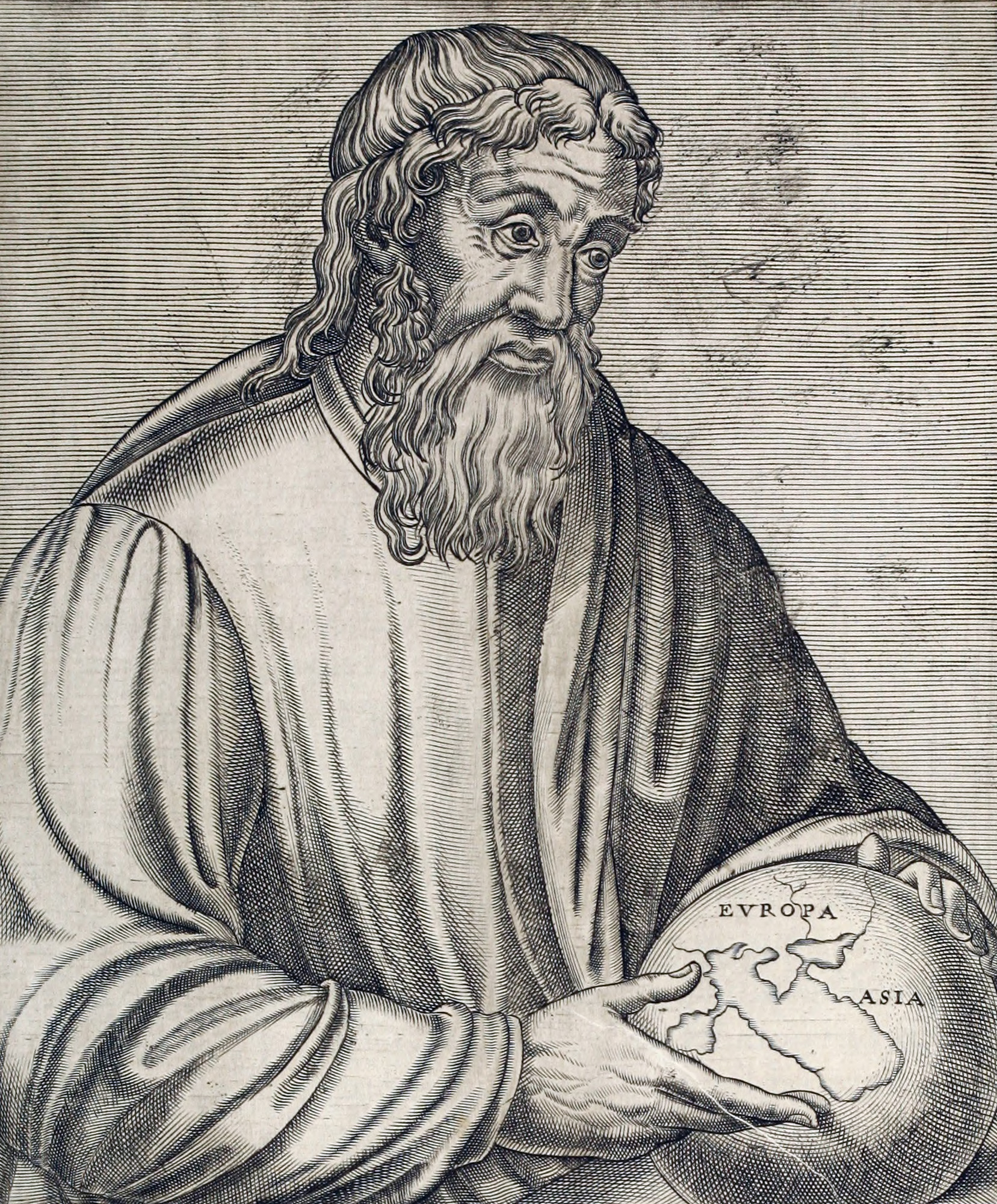
Strabo. Image via Wikimedia Commons.
Early European visitors
George Sandys’ account of his arrival in Alexandria at the beginning of the 17th century (“But Ah how much different is That Niobe from this!”) is taken from his A relation of a journey begun An. Dom. 1610 is freely available online via the wonderful archive.org, here. Sandys is one of my favourite characters and you can read more about him and his travels in Egyptologists’ Notebooks.
Luigi Mayer’s Views in Egypt from which I took several of his late 18th century drawings of Alexandria is also available via archive.org, here.
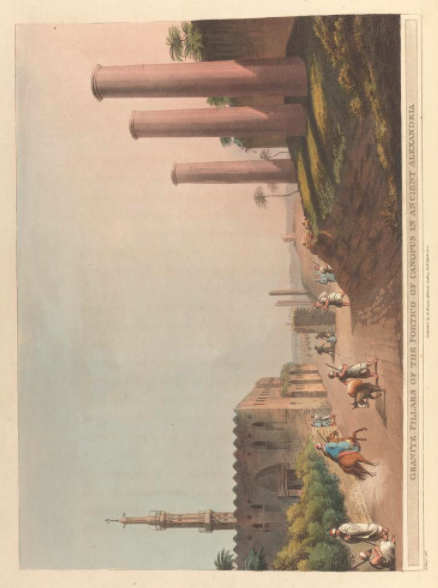
Luigi Mayer’s view of the main E-W running street in Alexandria with the mosque of el-Atarin at left and red granite columns still standing on the right.
The splendid map of the city produced by the artists, scholars and scientists who accompanied Napoleon’s armies to Egypt in 1798 is taken from the second volume of plates in the ‘Modern Egypt’ section of the Description de l’Égypte which are freely available here.

Map of Alexandria from the the ‘Modern Egypt’ section of the Description de l’Égypte.
Louis-François Cassas’ map from his Voyage pittoresque de la Syrie, de la Phoenicie, de la Palaestine et de la Basse Aegypte: ouvrage divisé en trois volumes contenant environ trois cent trente planches 1799/1800 is available via Wikimedia Commons, here.
Underwater and other modern archaeology
I also used a map of the archaeological remains discovered underwater by Frank Goddio which comes from his book, Alexandria: The Submerged Royal Quarters. Mr Goddio’s website features of wealth of information, photos and videos about his underwater work in Egypt, including in the Great Harbour at Alexandria, here.

Diver with a black granite sphinx of Ptolemy XII(?). ©Franck Goddio/Hilti Foundation
The other great institution that has carried out archaeological work underwater off the coast of Alexandria, and also on-land, is the Centre d’Études Alexandrines directed by Jean-Yves Empereur. The Centre’s website is full of useful information and photographs about the various projects it has undertaken and sites it has investigated including the Caesareum (the temple in front of which ‘Cleopatra’s Needles’ were erected), the Brucheum (the royal quarter), the area around the Canopic Way (the main east-west running street in the centre of the city), the cemeteries, and the cisterns.
I reproduced a number of photographs from Adriani, A, Repertorio d’Arte dell’Egitto Greco-Romano Series C (Rome, 1966). Achille Adriani was Director of the Greco-Roman Museum in Alexandria from 1932 to 1940 and again from 1948 to 1952 and as such was effectively chief archaeologist in the city and either excavated or documented a huge number of the ancient monuments. This volume is an indispensable record of what he found and the condition of the monuments in the middle of the 20th century and yet tragically it’s very difficult to come by. I managed to track down a copy of the plates volume during my work on the ‘Baths of Cleopatra’ in 2020. I hesitate even to mention it here as its so difficult to find but if anyone comes across another copy, especially the text volume, I’d be very interested to know!
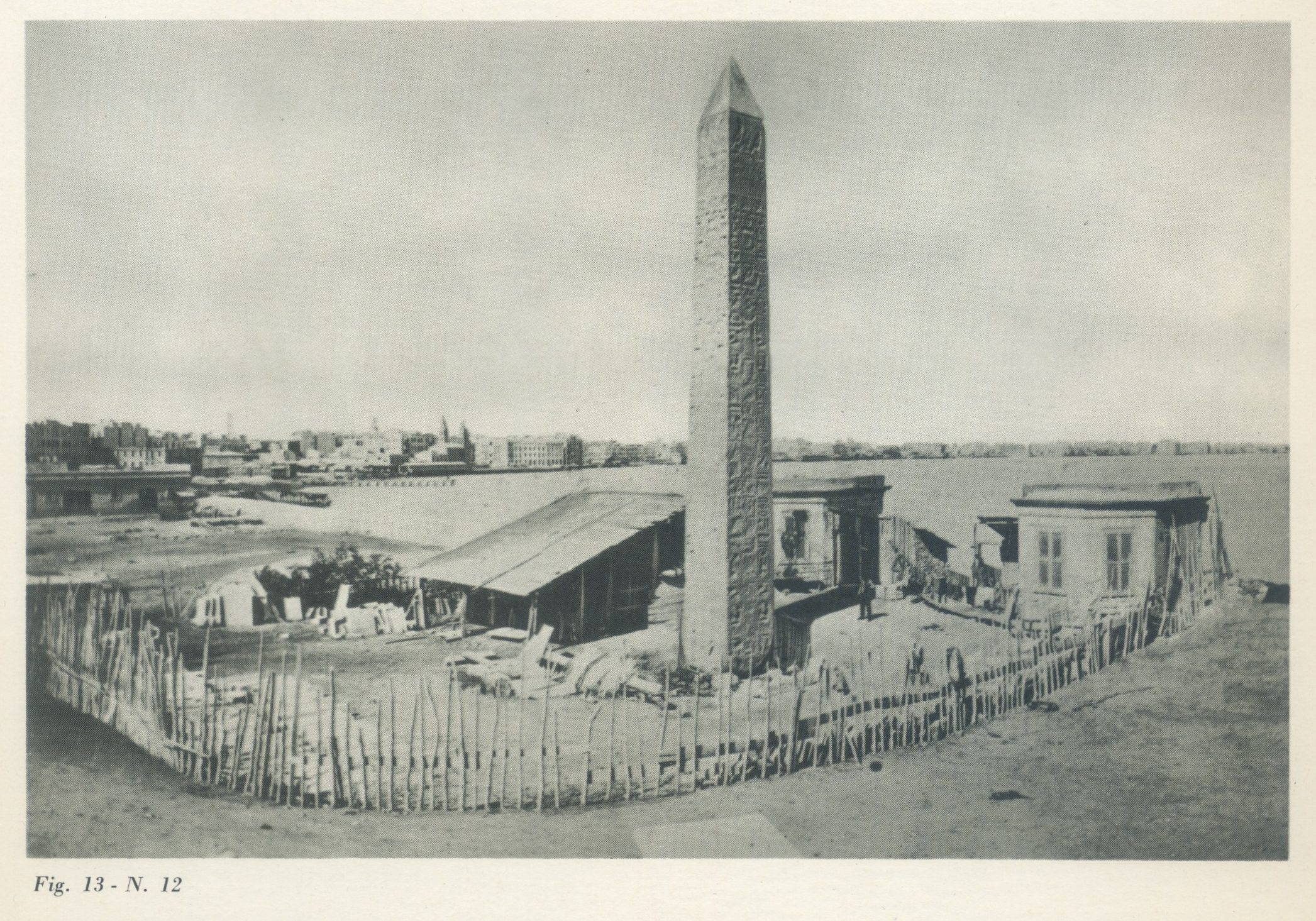
Photograph from Adriani, Repertorio d’Arte dell’Egitto Greco-Romano Series C of one of the two obelisks nicknamed ‘Cleopatra’s Needles’ while still in situ in Alexandria. This is the one now in Central Park in New York which was removed in 1880.
Tombs
For the cemeteries of Alexandria I highly recommend Venit, M, The Monumental Tombs of Ancient Alexandria: The Theater of the Dead although sadly this is another of those books that ‘s quite difficult to come by now (I have my own copy now but it wasn’t easy to find and not cheap either!).
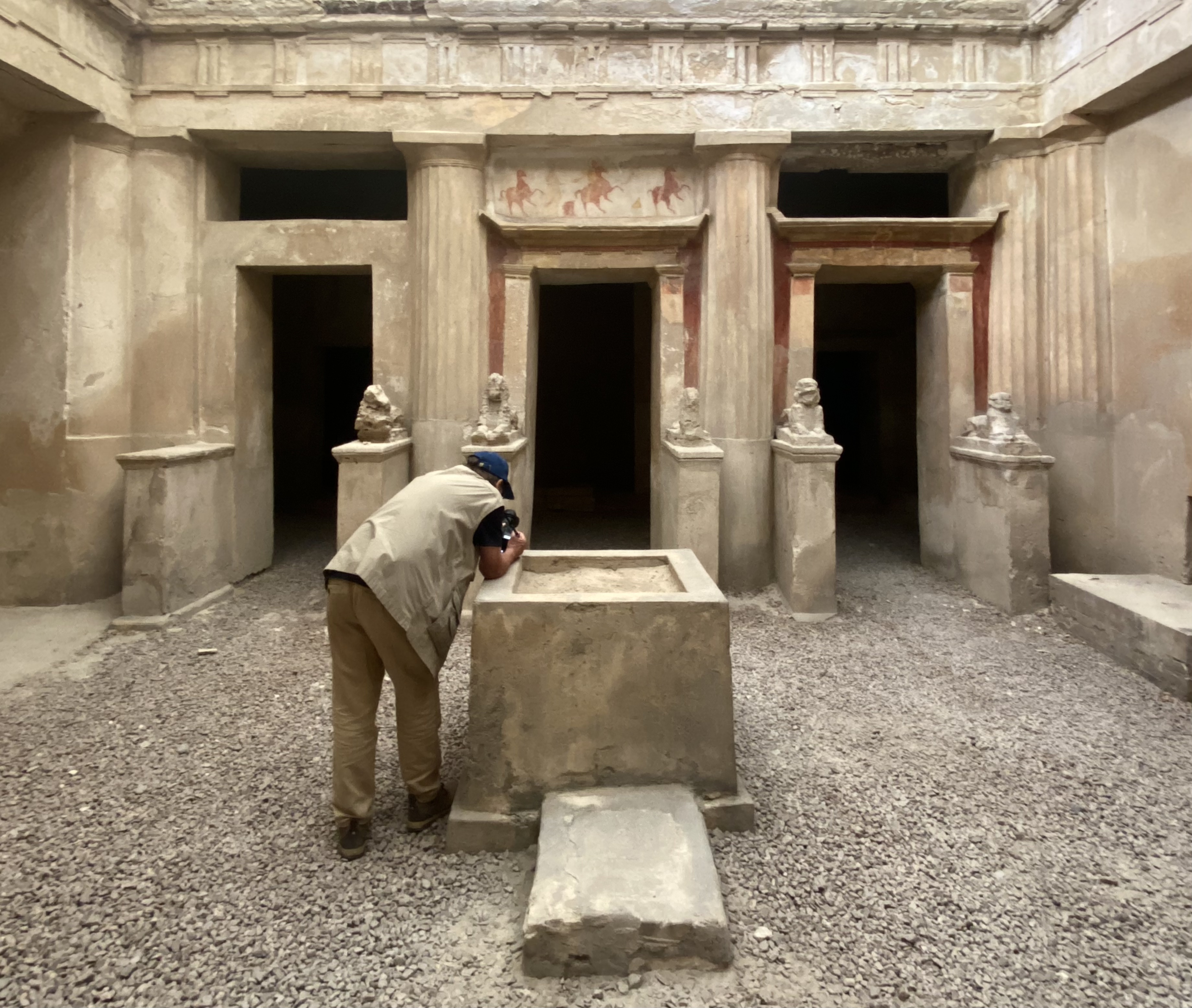
Tomb no. 1 in the Moustafa Pasha necropolis.
I’ve previously dealt with the subject of the tomb(s) of Alexander the Great in greater detail in my talk ‘Alexander the Great: Buried Three Times in Egypt…’ a recording of which is freely available on YouTube, here and below.
Notes and further reading on that lecture are here.
Although I didn’t really discuss it at all in this session, I have also dealt in the past with the question of the location Cleopatra’s tomb, in a talk entitled, ‘Cleopatra: Tomb, Baths and Birth-house’. This one is also freely available via YouTube, here and below.
My guide to further reading etc accompanying that one is here.
I can’t resist mentioning the ‘Lost Baths of Cleopatra’ which I discussed in this last talk, and which became the subject of a pet project during the lockdown in 2020 – see my piece here. The disappearance of the baths and nearby ‘Grand Catacomb’ of the Wardian district of Alexandria seems to me to exemplify the issue that Alexandria and its archaeology is so unfamiliar to so many of us, even specialists. Marjorie Venit summed the situation up nicely in her Monumental Tombs book (mentioned above):
“three major reasons conspire to keep Alexandrian monumental tombs almost entirely unknown beyond the few scholars who excavate in Alexandria or those who take particular interest in its monuments. First, now, as in the nineteenth century, Egyptian archaeology primarily focusses on the splendor of Egypt’s more easily visible and more exotic pharaonic past. Second, most tourists and the great majority of scholars arriving by air directly in Cairo find it even more convenient to avoid the city than did their nineteenth-century sea-dependent counterparts. Third, despite recent archaeological activity, the greatest number of Alexandrian tombs were excavated before World War II and, aside from the tombs at Chatby published by Breccia, those at Kom el-Shoqafa that comprise Schreiber’s monumental work, and those excavated in the 1930s at Moustapha Pasha published by Adriani, they exist only in difficult-to-access preliminary reports.”
I’m still a relative newcomer to Alexandrian archaeology myself but having written about the tombs of Alexander and Cleopatra in Searching for the Lost Tombs of Egypt, and spent a good while searching for source material for a map of Alexandria to go in Cleopatra Tells All!, I’m thoroughly hooked! And I’m very grateful for the opportunity to share a little of what I’ve learned with those who came along to the talk. Thanks!

As always if there’s anything I’ve missed or if you have any questions please let me know via this page.
 Dr Chris Naunton